Press Enter to search
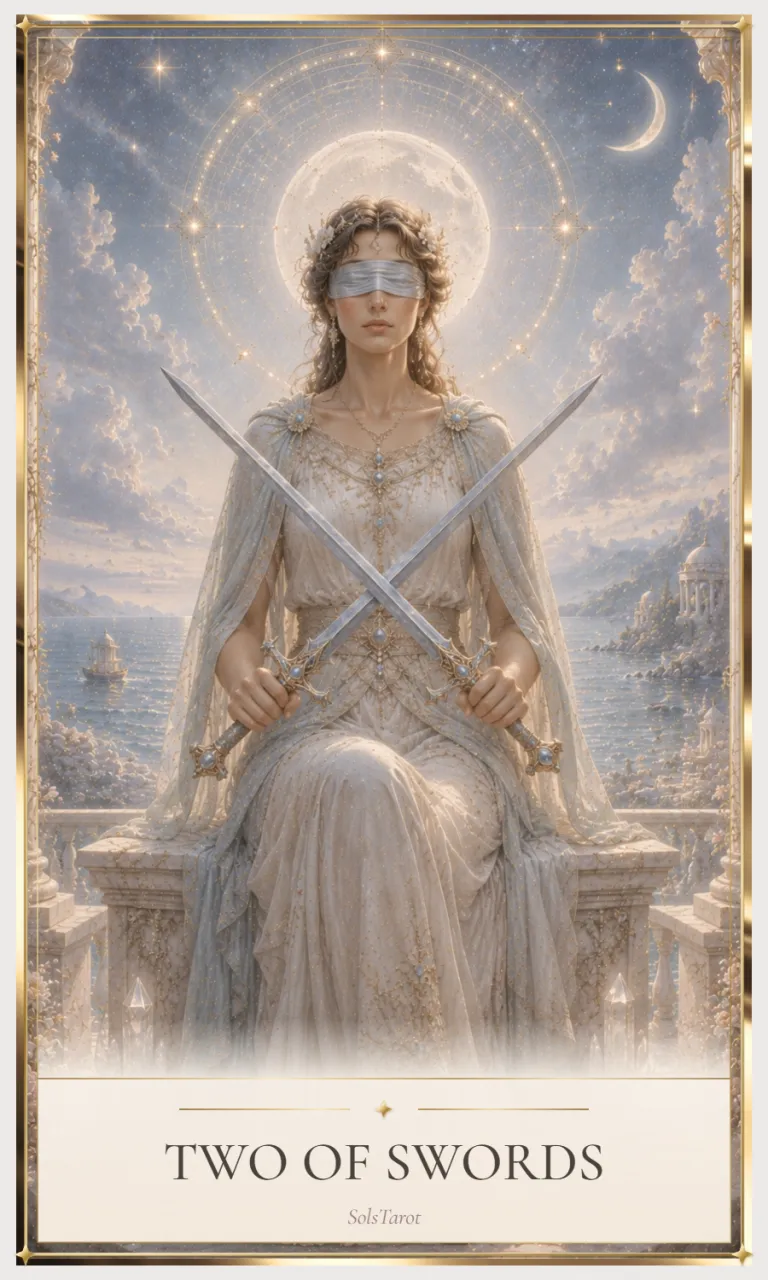
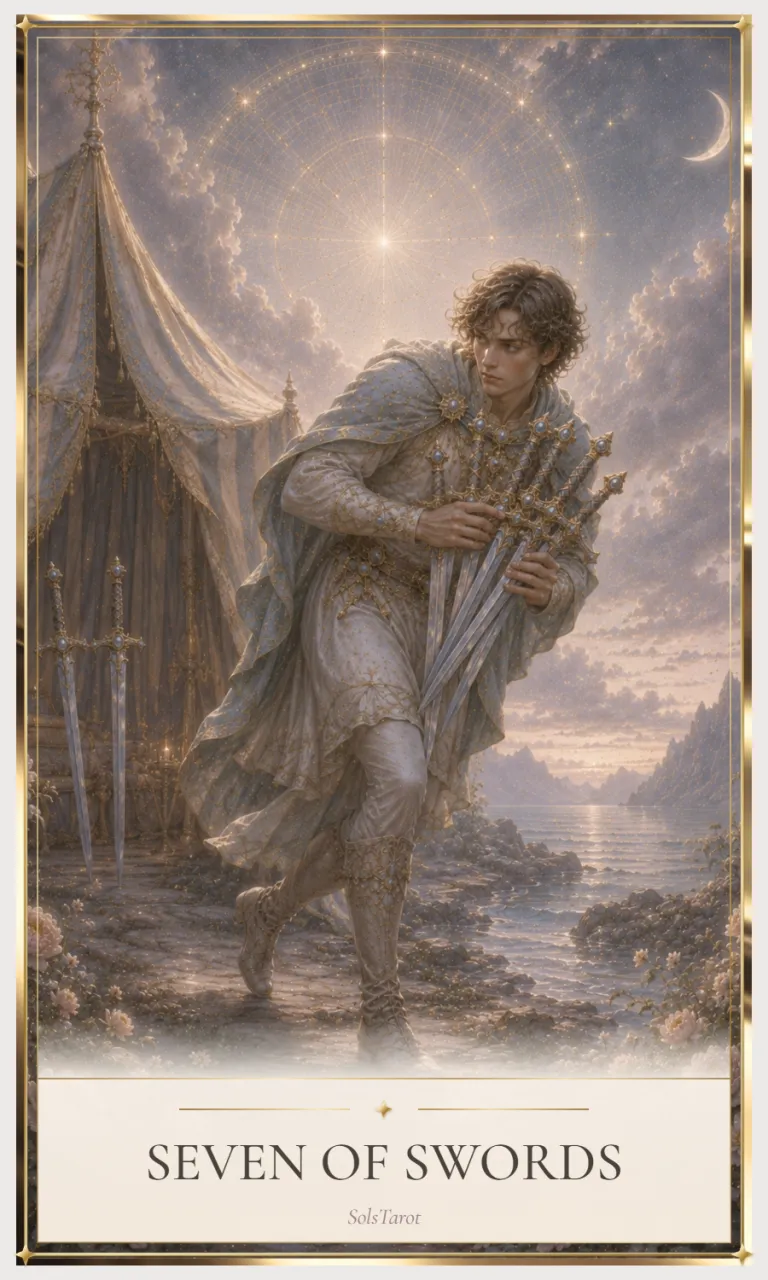
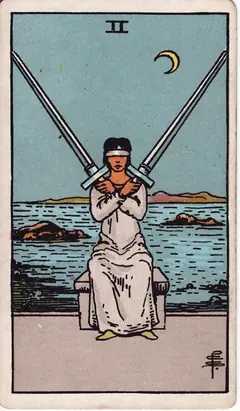
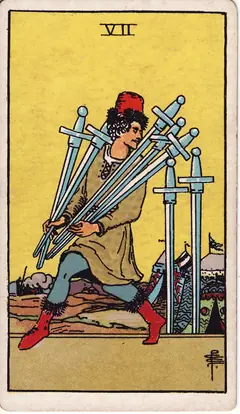
This reading unites Two of Swords and Seven of Swords — two cards whose meanings deepen when they appear side by side. Explore each card’s full meaning, then read how they speak together in love, career and spirit.
The Classic Deck
Two of Swords and Seven of Swords in the 1909 Rider–Waite
The deck most readers start with — and the one our meanings are built on.
Affiliate link · how it supports SolsTarot
The Two of Swords and Seven of Swords create a complex dance between mental paralysis and cunning action in your romantic landscape. You may find yourself caught between conflicting feelings about a relationship, unable to see clearly through the fog of indecision, while simultaneously sensing that someone,perhaps yourself,is not being entirely forthright. This combination suggests that avoidance and strategic maneuvering have become your emotional default, creating a pattern where authentic connection feels both necessary and impossibly vulnerable. The swords energy calls you to examine whether your protective strategies are actually serving your heart's deeper needs. There's wisdom in recognizing that sometimes the most honest choice requires cutting through both self-deception and the illusions others may be weaving around you.
Your professional path reveals a tension between being stuck in analysis paralysis and the temptation to take shortcuts or work around established systems. The Two of Swords suggests you're facing a career decision where you feel blindfolded, unable to weigh your options clearly, while the Seven of Swords whispers of alternative approaches that might bypass traditional methods. This pairing often indicates workplace dynamics where information is being withheld or where you're considering strategies that feel ethically ambiguous. You may be wrestling with whether to play by the rules when others seem to be bending them to their advantage. The key lies in finding a path that honors both your need for clarity and your authentic professional values, even if it means taking more time to see the full picture.
Your spiritual journey is currently navigating the space between mental stagnation and the shadow work of examining your own hidden motivations. The Two of Swords represents a crossroads in your inner development where you feel unable to move forward, caught between two spiritual truths or practices that seem mutually exclusive. Meanwhile, the Seven of Swords invites you to explore the parts of yourself that operate in stealth,the aspects of your psyche that work behind the scenes, sometimes in ways that surprise even you. This combination suggests that spiritual growth requires both patience with uncertainty and honest examination of your unconscious patterns. You're being called to sit with the discomfort of not knowing while simultaneously investigating the clever ways your ego might be sabotaging your deeper spiritual understanding.
The interplay between these cards invites you to explore the relationship between mental clarity and authentic action in your life. Notice where you might be using indecision as a form of protection, keeping yourself safely suspended between choices rather than risking forward movement. At the same time, examine whether you've developed habits of operating from the shadows,perhaps being less than fully honest with yourself or others about your true intentions or capabilities. This reading suggests that breakthrough comes not through forcing a decision or through clever maneuvering, but through cultivating the courage to see clearly and act with integrity. Consider that your current sense of being blocked might be wisdom in disguise, protecting you from premature action while your deeper knowing emerges.
“Two of Swords opens the question — Seven of Swords answers it.”
Every reading on this site is free. If this pairing spoke to you, a small coffee helps SolsTarot keep growing.
☕ Buy me a coffee on Ko-fiThis tarot reading is intended for reflection and personal insight. Tarot offers symbolic perspectives that may help you explore your thoughts and feelings, but it should not replace professional advice for health, mental well-being, legal matters, or financial decisions.